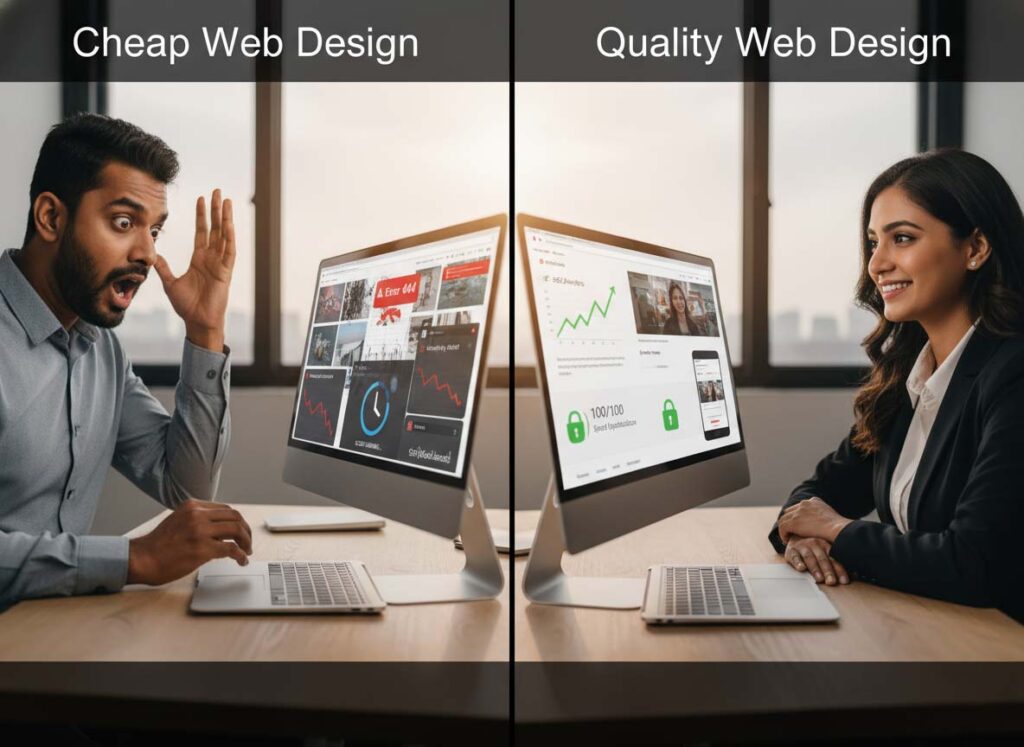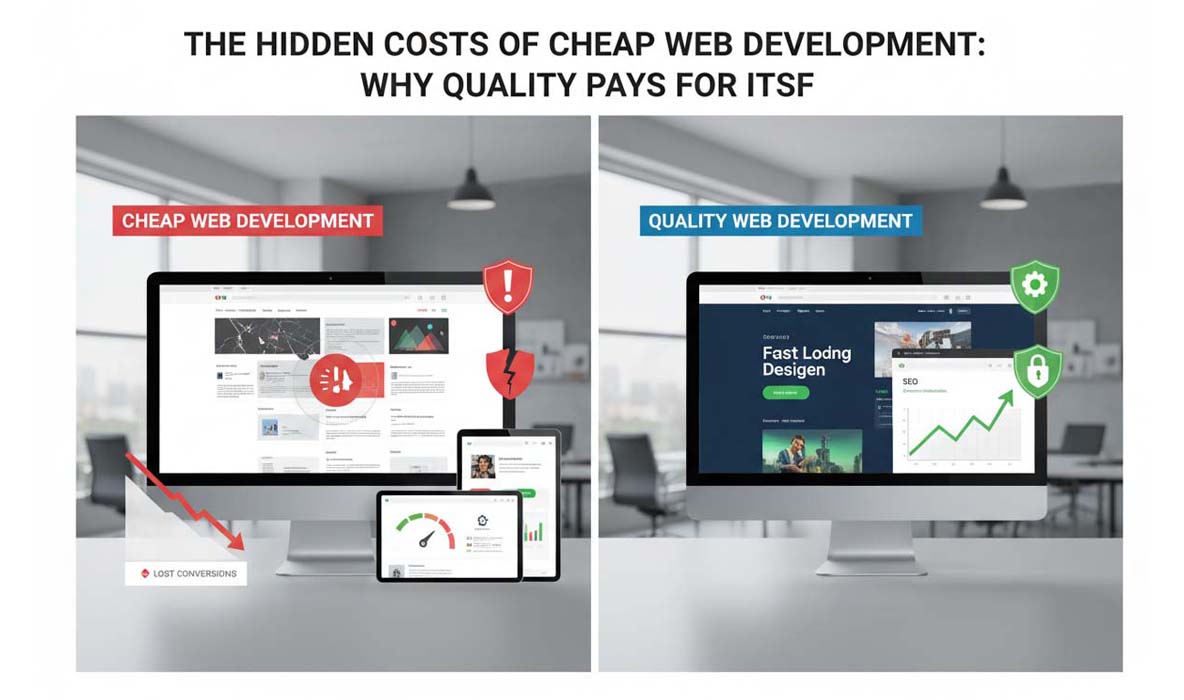
When starting a business or upgrading your online presence, choosing the cheapest web development option can seem like a smart financial decision. Saving money upfront feels practical – especially for startups and small businesses. However, cheap web development often leads to bigger expenses in the long run.
A website is not just a design. It is your digital storefront, your sales representative, and your brand’s first impression. Cutting corners today can cost you credibility, leads, and long-term growth tomorrow.
1. Poor Performance and Slow Loading Speed
- Higher bounce rates
- Lower Google rankings
- Poor user experience
- Lost sales opportunities
Studies consistently show that users leave a website if it takes more than a few seconds to load. Speed directly impacts both SEO and conversions.
2. Security Risks and Vulnerabilities v
Cheap development usually ignores proper security practices. Outdated plugins, weak coding standards, and shared hosting environments make websites vulnerable to hacking.
- Website downtime
- Data breaches
- Loss of customer trust
- Search engine penalties
Recovering from a hacked website can cost significantly more than investing in quality development from the beginning.
3. Limited Scalability
Many low-cost websites are not built with growth in mind. As your business expands, your website may struggle to handle:
- Increased traffic
- Advanced features
- Ecommerce integrations
- Marketing automation tools
Eventually, you may need a complete rebuild – doubling your cost and wasting valuable time.
4. Weak SEO Foundation
Search engine optimization starts at the development stage. Poor structure, incorrect heading hierarchy, lack of schema markup, and bad mobile responsiveness damage your ability to rank on Google.
A cheap website might look decent visually, but if it lacks technical SEO foundations, it won’t generate consistent organic traffic.
5. Generic Design and Poor Branding
Budget developers often rely on pre-made templates with minimal customization. This creates:
- A generic look
- Weak brand identity
- Reduced customer trust
6. Hidden Maintenance Costs
Cheap development rarely includes long-term support. You may later have to pay separately for:
- Bug fixes
- Speed optimization
- Security updates
- Plugin compatibility issues
Over time, these recurring expenses often exceed what you would have paid for quality development upfront.
7. Lost Leads and Lower Conversions
A website’s primary purpose is to generate business. If the user journey, call-to-action placement, or layout is poorly designed, visitors will not convert into customers.
Even a small drop in conversion rate can lead to significant revenue loss over months or years.
Why Quality Web Development Pays for Itself
- Fast performance
- Strong security
- SEO-friendly structure
- Scalable architecture
- Conversion-focused design
- Long-term stability
A well-built website becomes a revenue-generating asset rather than a recurring problem.
Final Thoughts
Choosing cheap web development may reduce your initial investment, but it often leads to hidden costs, technical problems, and lost business opportunities.
Quality web development is not an expense – it is a strategic investment. When done correctly, it improves trust, boosts search rankings, increases conversions, and supports sustainable growth.
In the long run, quality doesn’t cost more – it saves more.
The Hidden Costs of Cheap Web Development