
Shopify vs WooCommerce India: Which Is Better for Your Online Store in India?
Choosing between Shopify and WooCommerce is an important decision when planning an eCommerce website in India. Both platforms allow businesses to sell products online, manage orders, and build a digital presence. However, they differ in pricing structure, customisation, hosting, maintenance, and the level of technical control they provide.
For a new business, Shopify may be attractive because it combines store management and hosting in one service. WooCommerce, on the other hand, is a popular option for businesses that want to build an online store using WordPress and have greater control over their website.
The right choice depends on your budget, technical experience, product catalogue, business goals, and plans for future growth.
In this guide, we compare Shopify and WooCommerce from an Indian business perspective to help you choose the platform that fits your requirements.
1. What Is Shopify?
Shopify is a hosted eCommerce platform that allows businesses to create and manage online stores without having to manage their own web hosting infrastructure.
It provides a central dashboard for managing products, processing orders, customising storefronts, and connecting sales and marketing tools. Hosting and SSL certificates are included with its subscription plans. Shopify’s official pricing page also lists features such as inventory management, online store themes, and selling through supported sales channels.
Shopify can be suitable for businesses that want to focus on selling products rather than managing the technical aspects of a website.
Key Features of Shopify
- Hosted eCommerce platform: Hosting is included in the subscription.
- Store management: Manage products, orders, inventory, and customers from one dashboard.
- Themes and customisation: Use available themes to design your storefront.
- App integrations: Add supported features for marketing, shipping, reviews, and other business needs.
- Security infrastructure: Shopify manages core platform infrastructure and security updates.
Who Should Choose Shopify?
Shopify may be a good option for entrepreneurs launching their first online store, retailers who prefer a managed platform, and growing brands that want a streamlined store management experience.
It can also be useful for businesses that do not have an in-house technical team and prefer to pay a subscription for a managed service.
2. What Is WooCommerce?
WooCommerce is an open-source eCommerce plugin for WordPress. It transforms a WordPress website into an online store, allowing businesses to display products, accept orders, manage inventory, and extend store functionality through compatible plugins and integrations.
Unlike Shopify, WooCommerce does not provide hosting as part of a standard platform subscription. You choose a hosting provider and manage the website’s technical setup, either yourself or with help from a developer.
This approach offers flexibility in website design, content management, integrations, and custom development.
Key Features of WooCommerce
- WordPress integration: Combine your online store with pages, blogs, and other website content.
- Customisation: Modify the store's design and functionality using themes, plugins, and code.
- Hosting flexibility: Choose a hosting provider based on your budget and performance requirements.
- Extension ecosystem: Add compatible payment, shipping, analytics, and marketing features.
- Greater technical control: Access website files, databases, and code through your hosting environment.
Who Should Choose WooCommerce?
WooCommerce may suit businesses that already use WordPress, want extensive control over their website, or need customised store functionality.
It can also be a practical choice for businesses that want to combine eCommerce with content marketing, detailed landing pages, and a long-term SEO strategy.
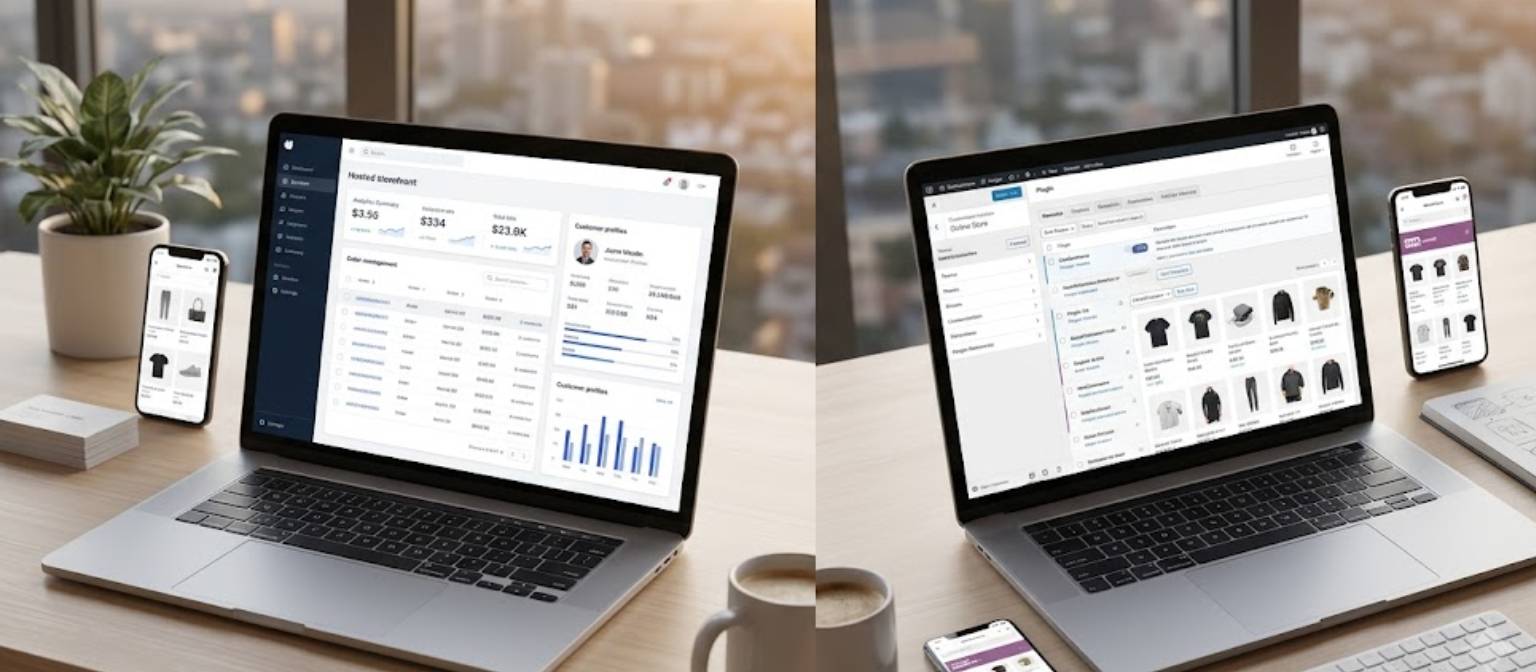
3. Shopify vs WooCommerce Pricing in India
Cost is one of the most important considerations when building an online store.
However, comparing Shopify’s subscription price with WooCommerce’s free core plugin does not provide a complete picture. You should calculate the total cost of running your store, including development, hosting, payment processing, extensions, and maintenance.
Shopify Costs
Shopify uses a subscription-based pricing model. The subscription provides access to the platform and its included features, with additional costs possible for paid apps, themes, professional services, and payment processing.
At the time of checking, Shopify’s India pricing page lists the Basic plan at ₹1,499 per month when billed annually and ₹1,994 per month when billed monthly. Promotions and plan prices can change, so check the official Shopify India pricing page before budgeting.
Additional costs may include:
- Domain registration, if you purchase a separate domain.
- Paid themes or applications.
- Third-party payment gateway charges.
- Applicable Shopify third-party transaction fees.
- Developer charges for custom design and functionality.
WooCommerce Costs
WooCommerce’s core plugin is free, but operating a store requires a WordPress website and suitable hosting.
Your total costs may include:
- Domain registration.
- Web hosting and SSL arrangements, depending on the provider.
- Premium themes or paid extensions.
- Payment gateway processing charges.
- Website development and customisation.
- Security, backups, updates, and maintenance.
Some businesses can operate with free plugins and an affordable hosting plan. Others may need premium tools, managed hosting, or regular developer support.
Which is cheaper?
WooCommerce can be economical for businesses that already have WordPress hosting and can manage maintenance efficiently. Shopify may offer better value to businesses that prefer a managed platform and want to reduce their own infrastructure responsibilities.
Compare the total cost over at least 12 months rather than deciding based only on the initial price.
4. Payment Gateways, UPI, and Cash on Delivery in India
Shopify supports third-party payment gateway integrations, subject to availability and eligibility. Indian businesses should verify that their chosen provider supports their required payment methods and works with their Shopify plan.
Shopify’s third-party transaction fees may also apply when an external payment provider is used. These fees are separate from the payment gateway’s own processing charges. Check the current plan terms before calculating costs.
WooCommerce Payment Options
WooCommerce supports payment gateway integrations through compatible plugins. Depending on the provider, a store may be able to accept UPI, cards, net banking, and other supported payment methods.
You should check the gateway’s processing fees, settlement terms, refund procedures, plugin compatibility, and security requirements before installation.
What About Cash on Delivery?
Both platforms can be configured to offer cash on delivery when appropriate for the business and its shipping arrangements.
However, COD orders may increase the risk of refused deliveries, return-to-origin shipments, and additional logistics expenses. Businesses should establish clear shipping policies and consider order verification measures where necessary.
Before launching, test the entire checkout process using the payment methods your customers are likely to use.
For example, a business offering website development services in Mumbai may benefit from a dedicated service page that explains its offerings, answers customer questions, and clearly communicates how to enquire.
Remember that SEO-friendly development creates a stronger foundation, but rankings also depend on content quality, competition, relevance, authority, and ongoing optimisation. No company can legitimately guarantee a particular Google ranking.
5. Which Platform Is Better for SEO?
Search engine optimisation helps potential customers discover your products through Google and other search engines.
Both Shopify and WooCommerce can support effective SEO. Neither platform automatically guarantees higher rankings.
Your results depend on the quality of your content, keyword targeting, technical implementation, product information, site performance, internal linking, and the competitiveness of your market.
Shopify SEO
Shopify provides standard SEO features for online stores, including editable page titles and meta descriptions, customisable URLs within platform rules, and tools for managing product and collection pages.
Its managed infrastructure reduces the amount of server maintenance required from the store owner. However, some URL structures are platform-defined, and additional SEO functionality may require apps or custom development.
WooCommerce SEO
WooCommerce benefits from its integration with WordPress, which provides a flexible environment for publishing blogs, building landing pages, and organising content around relevant search topics.
Depending on the website’s configuration, businesses can use SEO plugins to manage metadata, XML sitemaps, structured data, and other optimisation tasks.
This flexibility also means that website owners must configure their themes, plugins, hosting, and technical SEO correctly.
6. Website Design and Customisation
Your online store should reflect your brand, provide a smooth shopping experience, and make it easy for customers to find and purchase products.
Designing a Shopify Store
Shopify offers ready-made themes and customisation tools that help businesses create professional storefronts.
You can customise layouts, product pages, collections, navigation, and supported sections. More advanced design requirements may involve theme code, apps, or specialist development.
This approach can be useful for businesses that want to launch quickly without building every feature from scratch.
Designing a WooCommerce Store
WooCommerce works with WordPress themes and page-building tools, offering considerable flexibility in how store pages are designed.
Businesses can create custom product layouts, promotional landing pages, content hubs, and specialised shopping experiences. The amount of flexibility depends on the selected theme, plugins, developer expertise, and overall website architecture.
However, adding too many plugins or poorly written custom features can make the website harder to maintain.
Which Is Better for Custom Design?
Shopify is convenient for businesses that want a managed store with theme-based customisation. WooCommerce may be preferable when a project requires extensive control over the WordPress website and its underlying code.
In both cases, prioritise mobile usability, clear navigation, accessible design, and a straightforward checkout process.
7. Website Design and Customisation
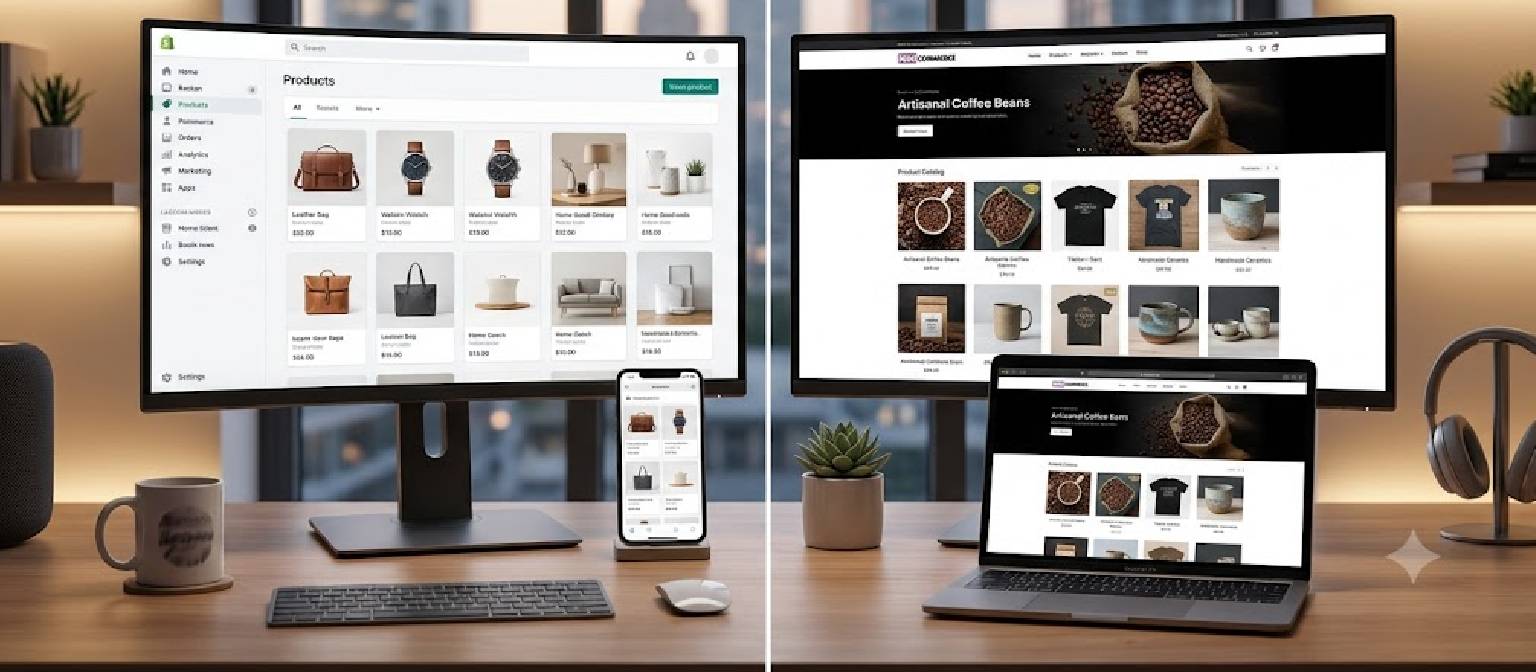
Your online store should reflect your brand, provide a smooth shopping experience, and make it easy for customers to find and purchase products.
Designing a Shopify Store
Shopify offers ready-made themes and customisation tools that help businesses create professional storefronts.
You can customise layouts, product pages, collections, navigation, and supported sections. More advanced design requirements may involve theme code, apps, or specialist development.
This approach can be useful for businesses that want to launch quickly without building every feature from scratch.
Designing a WooCommerce Store
WooCommerce works with WordPress themes and page-building tools, offering considerable flexibility in how store pages are designed.
Businesses can create custom product layouts, promotional landing pages, content hubs, and specialised shopping experiences. The amount of flexibility depends on the selected theme, plugins, developer expertise, and overall website architecture.
However, adding too many plugins or poorly written custom features can make the website harder to maintain.
Which Is Better for Custom Design?
Shopify is convenient for businesses that want a managed store with theme-based customisation. WooCommerce may be preferable when a project requires extensive control over the WordPress website and its underlying code.
In both cases, prioritise mobile usability, clear navigation, accessible design, and a straightforward checkout process.
8. Website Speed, Security, and Maintenance
A successful eCommerce website needs to remain accessible, secure, and easy to use as the business grows.
Shopify Maintenance
Shopify manages its core platform infrastructure, hosting environment, and platform-level updates. This reduces the need for store owners to manage server software and WordPress-style core updates themselves.
Nevertheless, store owners remain responsible for areas such as account security, staff permissions, app selection, product content, and the quality of their storefront.
WooCommerce Maintenance
WooCommerce gives businesses more choice over hosting and technical configuration. That flexibility requires the owner or their developer to maintain WordPress, themes, plugins, backups, and security controls.
Using reliable hosting, updating software promptly, testing changes, and maintaining backups can help reduce technical risks.
Which Platform Is Faster?
Neither platform is automatically faster in every situation. Performance depends on factors such as theme quality, image optimisation, third-party scripts, app or plugin usage, hosting, and caching.
Test the actual store using performance tools and improve the areas that affect customers most.
For businesses without technical support, Shopify’s managed approach may be easier. Businesses with experienced WordPress developers may prefer the control available through WooCommerce.
9. Shipping, Inventory, and GST Requirements
Indian eCommerce businesses often need to manage stock, shipping providers, tax calculations, invoices, returns, and order fulfilment.
Both Shopify and WooCommerce can support these operations through their built-in capabilities and compatible integrations.
Inventory Management
Both platforms offer inventory management functionality. The right setup depends on the number of products, product variations, warehouse locations, and whether the business also sells through physical shops or marketplaces.
Shipping Integrations
Businesses can connect compatible shipping providers and fulfilment services to calculate shipping charges, generate labels, and manage tracking information.
Before choosing a platform, verify that your preferred shipping provider supports your required workflow and plan.
GST and Invoicing
Indian sellers should check how their chosen setup handles GST calculations, invoice generation, product tax categories, and relevant reporting requirements.
Some workflows may require additional apps or plugins. Because tax obligations depend on the business and its transactions, consult a qualified tax professional when necessary.
Neither platform removes the need to configure and verify your business’s tax and fulfilment processes correctly.
10. Which Platform Is Easier for Beginners?
he answer depends on the type of work you want to do yourself.
Shopify is often easier for beginners who want to create a store, add products, manage orders, and use a central dashboard without handling hosting or software updates.
WooCommerce can also be user-friendly once configured, particularly for people who already know WordPress. However, setting up hosting, themes, plugins, backups, and payment integrations may require additional learning.
Consider the following examples:
- First-time entrepreneur: Shopify may be simpler if you want a managed platform.
- WordPress website owner: WooCommerce may be easier if you already understand WordPress.
- Business with a developer: WooCommerce may provide useful flexibility for custom requirements.
- Small team with limited technical resources: Shopify may reduce day-to-day infrastructure work.
The best choice is not necessarily the platform with the simplest dashboard. It is the one that fits your team’s skills and the tasks you need to manage regularly.
Conclusion
Shopify and WooCommerce are both capable eCommerce platforms, but they suit different business needs.
Shopify is a strong choice for businesses that prefer managed hosting, integrated store management, and less responsibility for technical maintenance. WooCommerce is a flexible option for businesses that want a WordPress-based store, extensive customisation, and greater control over their website infrastructure.
For Indian businesses, the decision should also account for payment gateway availability, transaction fees, shipping integrations, GST requirements, and ongoing operating costs.
There is no universally better platform. The right choice depends on how your business plans to sell, manage, and grow its online store.
If you need help planning an online store, visit VipulPore.com to explore website development services and discuss your eCommerce requirements.