E-commerce Site
E-commerce Site
E-commerce Site
E-commerce Site
E-commerce Site
E-commerce Site
E-commerce Site

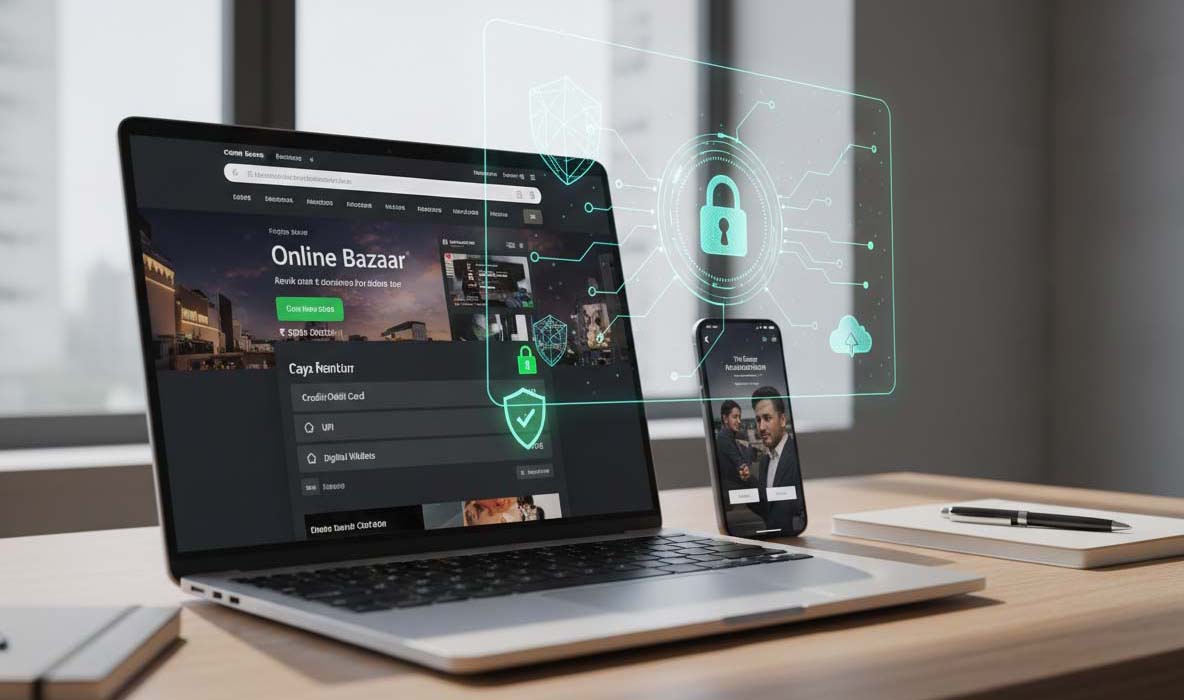
Protecting Your Indian E-commerce Site. India’s e-commerce market is growing at an incredible pace. With digital payments, UPI transactions, and online shopping becoming the norm, cyber threats are also increasing rapidly. For any Indian e-commerce business, security is no longer optional – it is a necessity.
A single security breach can lead to financial loss, damaged reputation, legal trouble, and permanent loss of customer trust. That’s why adopting a security-first approach is critical for sustainable online growth.
Here’s how you can protect your Indian e-commerce website from modern cyber threats.
India’s e-commerce market is growing at an incredible pace. With digital payments, UPI transactions, and online shopping becoming the norm, cyber threats are also increasing rapidly. For any Indian e-commerce business, security is no longer optional – it is a necessity.
A single security breach can lead to financial loss, damaged reputation, legal trouble, and permanent loss of customer trust. That’s why adopting a security-first approach is critical for sustainable online growth.
Here’s how you can protect your Indian e-commerce website from modern cyber threats.
1. Use Secure Hosting & SSL Encryption
- Choose a reliable, security-focused hosting provider
- Install an SSL certificate (HTTPS)
- Enable server-level firewalls
- Use secure data centers
SSL encryption protects customer data like login credentials, addresses, and payment details. Without HTTPS, your website is vulnerable and untrustworthy.
2. Implement Strong Payment Security
- Use PCI-DSS compliant payment gateways
- Enable two-factor authentication (2FA)
- Avoid storing sensitive card data on your server
- Use tokenization and encrypted APIs
3. Regular Software & Plugin Updates
- Update your CMS regularly
- Keep plugins and themes updated
- Remove unused plugins
- Patch vulnerabilities immediately
4. Strong Password Policies & Admin Protection
- Enforcing strong password rules
- Limiting login attempts
- Using two-factor authentication for admin users
- Changing default admin URLs
5. Install Web Application Firewall (WAF)
- SQL injection attacks
- Cross-site scripting (XSS)
- Bot attacks
- Brute-force login attempts
6. Secure Customer Data & Privacy Compliance
- Store minimal customer data
- Encrypt sensitive information
- Create a clear privacy policy
- Enable secure backups
7. Regular Backups & Disaster Recovery Plan
- Schedule automatic daily backups
- Store backups offsite
- Test restoration process regularly
- Have a recovery plan ready
8. Monitor & Detect Suspicious Activity
- Security monitoring tools
- Login activity tracking
- Malware scanning
- Uptime monitoring
9. Protect Against DDoS Attacks
- CDN with DDoS protection
- Traffic filtering
- Rate limiting
- Scalable hosting infrastructure
10. Educate Your Team
- Identify phishing emails
- Avoid suspicious downloads
- Use secure networks
- Follow cybersecurity best practices
Why Security Is a Business Investment
- Builds customer trust
- Improves payment confidence
- Reduces downtime
- Prevents financial losses
- Supports business continuity
Final Thoughts
Cyber threats are evolving every day. Indian e-commerce businesses must adopt a proactive, security-first mindset rather than reacting after a breach occurs.
Investing in strong hosting, payment security, regular updates, firewalls, backups, and monitoring ensures your online store remains safe and reliable.
At Vipul Pore and Company, we understand that security is the backbone of successful e-commerce. We design and develop secure, scalable, and performance-driven online stores that protect your business and your customers. Because in today’s digital world, security is not an add-on – it is the foundation of growth.