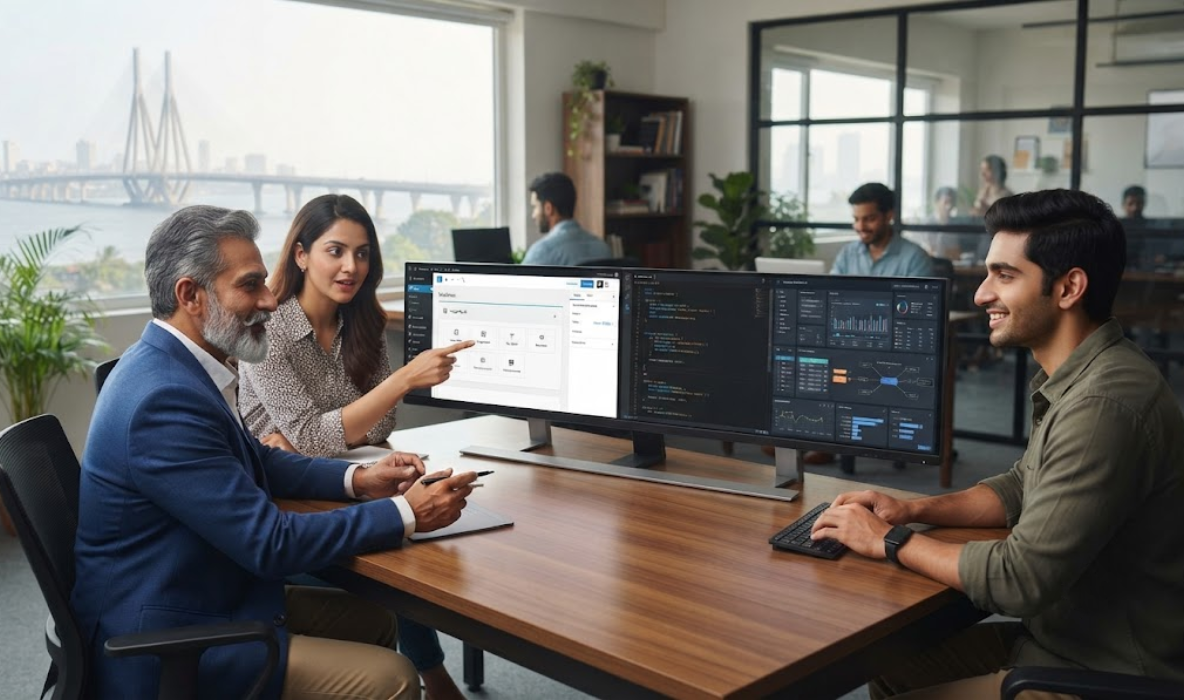
WordPress vs Custom Website Development: Why the Choice Matters
When a business decides to build a new website, one of the most important technology decisions is whether to use WordPress or custom website development.
Both approaches can produce professional, fast and SEO-friendly websites.
The difference is in how the website is built, maintained and expanded.
WordPress is an open-source publishing platform that provides themes, blocks, plugins and a large ecosystem for building websites. The official WordPress project describes it as an open-source platform designed for everything from individual websites to enterprise projects.
Custom website development, on the other hand, means developing the website specifically around a business’s requirements. The technology stack can be selected according to the project’s functionality, performance, integrations and long-term architecture.
For a small business, WordPress may provide everything needed to establish a professional online presence without unnecessary development complexity.
For a company with unique workflows, complex integrations or specialized applications, custom development may provide greater control.
The decision should therefore not be based on the assumption that one technology is automatically better than the other.
- Budget
- Website objectives
- Required functionality
- Design requirements
- SEO
- Performance
- Security
The right platform is the one that provides the best balance between business requirements, development effort and future growth.
What Is WordPress Website Development?
WordPress website development involves creating a website using the WordPress open-source platform.
A website can be created using an existing theme, a block-based design system, a page builder, custom templates, plugins or custom WordPress development.
Modern WordPress provides substantial design flexibility. Its Site Editor can be used to customize layouts, templates, headers, footers, styles and other site elements when a compatible block theme is used.
WordPress can therefore be much more than a simple blogging platform.
- Corporate websites
- Service websites
- Portfolio websites
- Educational websites
- News and publishing websites
- Membership websites
- E-commerce websites
Plugins can also extend functionality. WordPress’s official documentation explains that plugins can add additional capabilities to a website, while developers can also create custom themes and plugins when standard options are insufficient.
This creates a spectrum of WordPress development.
At one end, a business might use a professionally designed theme with limited customization.
At the other end, a development team might create custom WordPress templates, custom plugins and integrations while still using WordPress as the content management system.
That means WordPress and custom development are not always completely separate choices.
A business can use WordPress as the foundation while incorporating significant custom development.
What Is Custom Website Development?
Custom website development means building a website specifically around the requirements of a business rather than relying primarily on a pre-built theme and standard plugin ecosystem.
The development team can select the technology stack, database architecture, front-end framework, back-end framework and APIs according to the project.
A custom website might be built using technologies such as:
- PHP
- Laravel
- Node.js
- React
- Next.js
- Python
- MySQL
The specific technology should depend on the project’s actual requirements.
A custom website is particularly useful when the business needs functionality that cannot be efficiently achieved using standard WordPress components.
Examples include a custom customer portal, complex B2B pricing system, specialized booking engine, advanced marketplace, internal dashboard or highly customized business workflow.
Custom development can also provide more direct control over the website architecture.

WordPress vs Custom Website: Cost Comparison
Cost is one of the biggest reasons businesses compare these two approaches.
A WordPress website can often be launched with a lower initial development investment because businesses can use existing themes, plugins and established WordPress functionality.
Custom development usually requires more design and engineering hours.
Typical planning considerations include:
- WordPress setup: Domain, hosting, theme, plugins and development.
- Custom WordPress: Additional investment for custom templates, functionality and integrations.
- Custom website: UI/UX, architecture, front-end, back-end, database, APIs and testing.
- Maintenance: Both approaches require ongoing maintenance, although the type of maintenance differs.
- Third-party tools: Premium plugins and SaaS integrations can add recurring costs to WordPress projects.
- Developer support: Custom platforms can require more specialized technical support.
- Future development: New features can increase the cost of either approach.
A basic WordPress website can therefore be substantially less expensive than a fully custom website.
However, comparing only the initial quotation can be misleading.
Suppose a business requires a custom booking system. Building that functionality using WordPress may initially appear cheaper, but forcing complex custom workflows into a large collection of plugins could create maintenance and performance problems.
In such a situation, custom development may provide better long-term value.
The objective should therefore be total value rather than minimum initial price.
Design and Customization: Which Gives You More Control?
Design is another area where the difference between WordPress and custom development can become important.
WordPress offers a large range of themes, templates, blocks and customization tools. Modern WordPress Site Editor functionality allows compatible block themes to be edited across areas such as headers, footers, templates, navigation and global styles.
This can significantly reduce design and development time.
Businesses can also create custom WordPress themes when they need a more distinctive interface.
Custom development starts from the business requirements rather than an existing theme structure.
That can provide complete control over:
- Page layouts
- Navigation
- User interfaces
- Animations
- Interactive components
- Forms
- Dashboards
However, complete freedom also increases the amount of design and development work.
For a standard corporate website, a well-customized WordPress solution may provide more than enough design flexibility.
For a highly specialized digital product, custom development can make more sense.
The important question is not:
“Which platform gives more customization?”
The answer to that is obviously custom development.
The more useful question is:
“How much customization does my business actually need?”
SEO and Performance: Is WordPress or Custom Development Better?
SEO is sometimes used as an argument for choosing one technology over another.
But there is no simple rule that says WordPress automatically ranks better or custom websites automatically perform better.
Search visibility depends on many factors, including:
- Website architecture
- Page quality
- Search intent
- Content
- Technical SEO
- Internal linking
Google provides guidance on how websites can influence their appearance in Search, including structured data and other search appearance features.
WordPress can support SEO through its flexible content structure, plugins, custom fields, templates and developer APIs.
Custom websites can also be engineered specifically for SEO requirements.
The difference is usually in implementation quality.
A strong website should focus on:
- Clean URL structures
- Descriptive page titles
- Useful meta descriptions
- Proper heading hierarchy
- Fast loading
- Mobile responsiveness
A WordPress website with excessive plugins and poorly optimized media can become slow.
A custom website with inefficient JavaScript, poor caching or badly designed APIs can have the same problem.
Therefore, SEO should be part of development from the beginning, regardless of platform.
Security and Maintenance: WordPress vs Custom Website
Security is often misunderstood when comparing WordPress and custom development.
Some businesses assume that custom automatically means secure and WordPress automatically means insecure.
Neither statement is correct.
Security depends on how the website is developed, configured and maintained.
WordPress itself provides official guidance covering updates, security, maintenance and site management.
For WordPress, maintenance may involve:
- WordPress core updates
- Theme updates
- Plugin updates
- Security monitoring
- Backups
- Malware scanning
- User access management
- Database maintenance
Custom websites have different requirements.
They may require:
- Framework updates
- Server updates
- Dependency updates
- Security patches
- Code audits
The key is having a clear maintenance plan.
Scalability: Which Is Better for a Growing Business?
Scalability means the ability of a website to handle increasing traffic, content, customers and functionality without requiring an unnecessary rebuild.
Both WordPress and custom development can scale.
The important factor is how the website is architected.
A WordPress website can support substantial growth when properly configured with appropriate hosting, caching, database optimization, image optimization and carefully selected plugins.
WordPress’s developer ecosystem also provides APIs, themes, plugins and other tools for extending websites and applications.
Custom development can be designed specifically around expected growth.
For example, a company expecting millions of users or requiring complex real-time interactions may benefit from an architecture built specifically for those requirements.
However, not every business needs enterprise architecture on day one.
A local service business with a few thousand monthly visitors does not necessarily need a highly complex custom platform.
A practical strategy is to build according to current requirements plus realistic future growth.
Overengineering can increase development costs without creating meaningful business value.
Which Businesses Should Choose WordPress?
WordPress is often an excellent choice for businesses that need a professional website, strong content management and flexibility without developing every component from scratch.
WordPress is particularly suitable for:
- Small and medium businesses that need professional websites within a controlled budget.
- Service businesses such as consultants, agencies, doctors, lawyers, architects and other professionals.
- Content-driven businesses that publish blogs, guides, resources and landing pages regularly.
- Companies requiring frequent updates where internal teams need to manage website content.
- Businesses planning e-commerce using WooCommerce or other commerce solutions.
- Businesses that need SEO-focused websites with flexible page and content structures.
- Organizations that want a large development ecosystem with many themes, plugins and specialists available.
WordPress can also be customized extensively.
A business does not necessarily need to accept a generic template simply because it chooses WordPress.
A development team can create custom page templates, custom functionality, custom plugins and integrations while keeping WordPress as the content management system.
This can provide a useful balance between flexibility and development efficiency.
Which Businesses Should Choose Custom Website Development?
Custom development becomes more attractive when a business’s requirements move beyond conventional website functionality.
Custom development may be appropriate when:
- Start with an MVP: Launch the essential shopping functionality first.
- Choose the right platform: Avoid custom development when Shopify or WooCommerce can meet the requirements.
- Use a quality theme strategically: A well-designed theme can reduce unnecessary design and development time.
- Prioritize features: Separate essential launch features from future enhancements.
- Prepare product data: Clean product names, images, prices and descriptions before development.
- Avoid excessive plugins: Every additional plugin can introduce cost, maintenance and potential performance issues.
- Plan integrations early: Late integration changes can increase development hours.
- Design mobile-first: Fixing major responsive problems after development can be expensive.
- Plan SEO from the beginning: Correct URL structures, product data and technical architecture are easier to establish during development.
- Think about scalability: Build a foundation that can grow rather than rebuilding the website after a few months.
The goal should not be to create the cheapest possible website.
It should be to create the best website within a realistic business budget.
Saving ₹30,000 during development is not valuable if the resulting website loses customers because it is slow, confusing or difficult to use.
Conclusion
The choice between WordPress vs custom website development should be based on what your business actually needs rather than which technology is considered more advanced.
WordPress provides a powerful open-source foundation with themes, plugins, blocks, customization options and developer APIs. Its current ecosystem supports everything from straightforward business websites to highly customized projects.
Custom development provides greater control over architecture, functionality and the overall digital experience.
For many small and medium-sized businesses, WordPress can provide an excellent balance of cost, flexibility, content management and scalability.
For businesses with highly specialized requirements, custom development can deliver the control necessary to build unique digital systems.