
Custom Website vs WordPress Website: Which Is Better for Your Business in 2027?
Choosing the right technology is one of the most important decisions when building a business website. Before starting development, many business owners face a common question: should they choose a WordPress website or invest in a custom-developed website?
Both options can help businesses establish a professional online presence, showcase services, generate enquiries and reach potential customers. However, they differ in development approach, flexibility, maintenance requirements, costs and the level of customisation available.
A WordPress website uses an established content management system that allows businesses to manage pages, publish blogs and extend functionality through themes and plugins. A custom website is developed around specific business requirements using technologies selected by the development team.
The right choice depends on your business objectives, available budget, technical requirements and future plans. In this guide, we compare custom website development vs WordPress across important factors to help you make an informed decision in 2027.
1. What Is a WordPress Website?
WordPress is an open-source content management system (CMS) used to create and manage different types of websites. Businesses can use it to build corporate websites, blogs, portfolios, educational platforms and e-commerce stores.
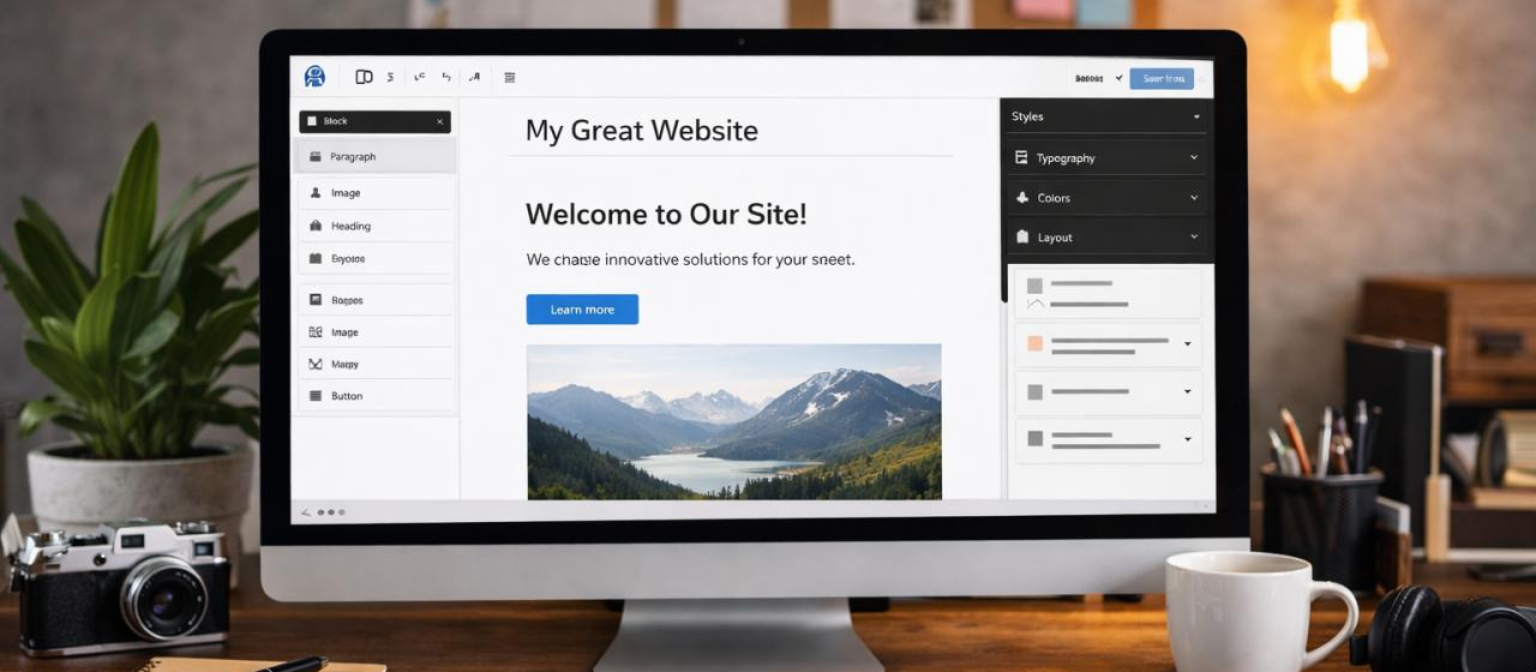
One of its biggest advantages is its flexibility. Users can manage website content through an administrative dashboard without writing code for every update. Themes help control the website’s appearance, while plugins add features such as contact forms, SEO tools, booking systems and online stores.
WordPress can also be customised through development work. A developer can modify existing themes, create custom themes, develop plugins and integrate external services according to business requirements.
For small and medium-sized businesses, WordPress can provide a practical balance between development investment and content management flexibility.
However, the quality of a WordPress website depends on its theme, hosting, plugins, development practices and ongoing maintenance. Installing too many unnecessary plugins or using poorly maintained components can create performance and security problems.
2. What Is a Custom Website?
A custom website is developed specifically around a business’s requirements instead of relying entirely on a ready-made website theme or standard platform setup.
Developers may use technologies such as HTML, CSS, JavaScript, PHP, Laravel, React, Next.js or other frameworks depending on the project’s requirements.
This approach allows businesses to create unique layouts, specialised functionality and integrations that may not be conveniently available through standard themes or plugins.
A custom website may be suitable for businesses that require:
- Unique website design: Custom layouts and user experiences developed around specific branding and customer requirements.
- Advanced functionality: Specialised booking systems, calculators, dashboards, customer portals or business workflows.
- Third-party integrations: Connections with CRM systems, ERP software, APIs, payment services and other business applications.
- Custom data management: Specialised databases and processes for managing business information.
- Greater technical control: More flexibility over the development architecture, code structure and functionality.
Custom development provides significant flexibility, but it also requires detailed planning. The business must define its requirements clearly, and future updates may require developer involvement unless a suitable content management system is included.
3. Custom Website vs WordPress: Key Differences
Although both approaches can produce professional websites, their development and management processes are different.
WordPress provides an established foundation with an administration dashboard, themes and plugins. Custom development allows the developer to create a solution around the specific requirements of the business.
The differences become clearer when comparing project requirements, development effort and long-term management.
WordPress is generally convenient for businesses that publish content regularly and need standard website functionality. Custom development is more suitable when the project involves unique business logic, specialised integrations or application-like features.
Neither approach automatically guarantees better website performance, security or Google rankings. These depend on how the website is designed, developed, hosted and maintained.
The most important decision is choosing the approach that solves your business requirements without introducing unnecessary complexity.
4. WordPress vs Custom Website: Cost, Development Time and Maintenance
Website development costs depend on the project’s scope rather than the technology name alone. A customised WordPress website can require substantial development work, while a simple custom-coded website may be relatively straightforward.
In general, WordPress can reduce development effort for standard business websites because developers can use its existing content management features. Custom development may require additional planning, coding and testing.
Important comparison areas include:
- Initial development cost: WordPress can be more economical for standard websites, while custom development may require a larger investment for specialised functionality.
- Development timeline: WordPress projects can often launch faster when requirements are standard. Custom projects may take longer depending on their complexity.
- Content management: WordPress provides an established dashboard, whereas a custom website may need a separate content management interface.
- Maintenance: WordPress requires updates to its core software, themes and plugins. Custom websites require maintenance of their code, frameworks, dependencies and hosting environment.
- Future modifications: WordPress offers existing plugins and development options, while custom functionality may require changes by developers familiar with the project.
For accurate budgeting, compare the total cost of development, hosting, licences, maintenance and future improvements rather than looking only at the initial quotation.
5. Which Website Offers Better Performance and Loading Speed?

Website speed is an important part of the user experience. Visitors expect pages to load smoothly, and slow websites can create frustration during browsing, enquiry submissions and online purchases.
A custom-coded website can be developed with a focused architecture that includes only the functionality required by the project. This may help reduce unnecessary scripts, dependencies and resources.
However, custom development does not automatically produce a fast website. Poor coding, oversized images, inefficient database queries or unsuitable hosting can affect performance.
WordPress websites can also achieve good performance when developed with a lightweight theme, suitable hosting, optimised images, caching and carefully selected plugins.
The key is to avoid unnecessary functionality and test the website during development.
Google’s Core Web Vitals provide useful measurements for loading performance, responsiveness and visual stability. Developers should consider these measurements when optimising both WordPress and custom websites.
Instead of choosing a platform based only on claims about speed, evaluate the actual website’s performance and identify opportunities for improvement.
6. SEO Capabilities: Can WordPress and Custom Websites Rank on Google?
Search engine optimisation is important for businesses that want to attract organic visitors through Google. Both WordPress and custom-developed websites can support SEO when their technical structure and content are implemented correctly.
WordPress offers access to SEO plugins that help manage page titles, meta descriptions, XML sitemaps and other optimisation settings. Its content management interface also makes publishing blogs and updating website pages convenient.
Custom websites provide developers with control over technical implementation. They can create customised URL structures, metadata, structured data and page templates according to the project’s requirements.
Important SEO considerations for both platforms include:
- Page structure: Organise content with meaningful headings and logical navigation.
- Technical SEO: Configure crawlable links, appropriate indexing settings and XML sitemaps.
- Mobile responsiveness: Make sure important content and functionality work across mobile devices.
- Page performance: Optimise images, scripts, loading behaviour and Core Web Vitals.
- Content optimisation: Publish useful information that answers the questions of your target audience.
- URL management: Use descriptive URLs and handle redirects properly when changing website structures.
A WordPress plugin cannot replace a complete SEO strategy, and custom coding does not automatically improve rankings.
Google evaluates many aspects of a website and its content. Therefore, businesses should focus on useful information, technical quality, accessibility and a positive user experience rather than assuming one development platform will rank better.
7. Security and Website Ownership: What Should Businesses Consider?
Website security is essential because business websites may contain customer information, enquiry details, login credentials and other important data.
WordPress is widely used and supported by a large ecosystem of themes and plugins. However, businesses must keep the platform, extensions and themes updated. Unnecessary plugins and outdated software can introduce avoidable risks.
Custom websites provide control over the components used in the project. Developers can limit unnecessary dependencies and implement security measures according to the application’s requirements.
However, custom development still requires secure coding, access control, server configuration, dependency updates, backups and regular testing.
Website ownership is another important consideration. Businesses should understand who controls the domain, hosting, administrator accounts, source code and third-party licences.
Whether you choose WordPress or custom development, make sure your organisation receives the access and documentation agreed in the development contract.
A secure website is not achieved through technology selection alone. It requires consistent maintenance and responsible management.
8. Scalability and Future Business Requirements
Your website requirements may change as your business grows. You may initially need a few service pages, but future plans could include online payments, customer accounts, appointment booking, multiple languages or business management integrations.
WordPress can support many growing business requirements through themes, plugins, custom development and integrations. WooCommerce can also extend WordPress into an online store.
Custom development may provide a better fit when the website needs complex workflows, specialised data processing or functionality that does not fit conveniently into an existing platform.
However, scalability is not determined by whether a website is custom-coded or built with WordPress. Architecture, hosting infrastructure, database design, code quality and development planning also matter.
Before choosing a platform, discuss your expected business growth with the developer. A suitable solution should support current needs without making future expansion unnecessarily difficult.
9. Which Website Should You Choose for Your Business?
The right option depends on the type of business, website functionality and the way your team plans to manage the website.
A standard company website does not necessarily require custom development. Similarly, a business with complex workflows should not force every requirement into a standard WordPress setup.
Consider these common business scenarios:
- Small businesses and startups: WordPress is often suitable for companies that need service pages, contact forms, portfolios and regular content updates.
- Corporate websites: WordPress or custom development can work well, depending on the level of design customisation and functionality required.
- Content-focused websites: WordPress is a practical choice for blogs, resource libraries and websites where teams publish content regularly.
- E-commerce businesses: WordPress with WooCommerce or a dedicated platform such as Shopify can support online stores, while custom development may be useful for specialised commerce workflows.
- Customer portals: Custom development may be appropriate when businesses need specialised login systems, dashboards and customer-specific information.
- Complex business applications: A custom-developed solution may be more suitable when the project requires unique workflows and advanced integrations.
The best decision comes from matching the technology to your actual requirements instead of choosing a platform simply because it is popular or appears more advanced.
10. How to Select the Right Website Development Partner
Even the right technology can produce a poor result if the development process is not planned properly. Choosing an experienced website development partner is therefore an important part of your decision.
Start by discussing your business objectives, target customers, website structure and expected functionality. A reliable developer should understand these requirements before recommending WordPress or custom development.
Review previous projects and check whether the developer has experience with the technology proposed for your website. Ask about mobile responsiveness, performance optimisation, SEO foundations, security practices and post-launch support.
You should also request a written proposal explaining the development scope, project timeline, pricing, revision policy and ownership arrangements.
For WordPress projects, clarify how themes, plugins and future updates will be managed. For custom projects, ask which technologies will be used, how the code will be documented and who will handle future development.
Vipul Pore & Co. provides website design and development solutions involving WordPress, Shopify and e-commerce development. Businesses can explore the company’s website development services in Mumbai and e-commerce development solutions to understand the available options.
Conclusion
Choosing between a custom website and a WordPress website depends on your business requirements, budget, functionality and long-term plans.
WordPress is a practical option for many small businesses, corporate websites, blogs and content-driven platforms because it offers an established content management system and flexible development options.
Custom website development is worth considering when your project requires specialised functionality, unique workflows, advanced integrations or greater control over the technical architecture.
Both approaches can support professional design, mobile responsiveness, website security and SEO when implemented correctly.
Before making a decision, evaluate your current requirements, future plans, maintenance responsibilities and total development investment. The right website should not simply look professional; it should help your business communicate effectively, serve customers and grow online.