
How to Choose the Best Website Development Company in Mumbai: 10 Things to Check Before Hiring
A professional website is more than an online presence. It represents your business, communicates your services, builds customer confidence and creates opportunities to generate enquiries and sales. Whether you are starting a new business, expanding an existing company or planning to launch an e-commerce store, choosing the right website development partner is an important decision.
Mumbai has many website developers, freelancers and digital agencies offering different services and pricing packages. Some specialise in WordPress websites, while others focus on Shopify stores, custom web applications, UI/UX design or complete digital solutions. With so many options, selecting the right company can become confusing.
Choosing a developer only because they offer the lowest price or promise quick delivery can create problems later. Your website may have limited functionality, poor mobile performance, technical SEO issues or inadequate support after launch.
If you are searching for the best website development company in Mumbai, it is important to evaluate more than attractive designs and marketing promises. You should understand the company’s experience, portfolio, development process, technology expertise, pricing, communication and long-term support.
This guide explains ten important things to check before hiring a website development company so you can make a more informed decision and invest in a website that supports your business goals.
1. Check the Company's Experience and Industry Knowledge
The first step is understanding the company’s experience in website design and development. A developer may have excellent technical knowledge, but you should also evaluate whether they understand your business requirements and target audience.
For example, a restaurant website may require menus, table reservations and location information, whereas an e-commerce business may need product catalogues, payment gateways, inventory management and shipping integrations.
An experienced development partner should be able to understand these differences and recommend an appropriate solution.
Look at the company’s background, services, years of practical experience and types of projects completed. Ask whether they have worked with businesses similar to yours and whether they understand the challenges associated with your industry.
You should also evaluate how they approach project planning. A reliable company will generally ask questions about your business objectives, customers, competitors, required features and expected results before recommending a development approach.
The goal is to find a partner who understands both website technology and the purpose behind your website.
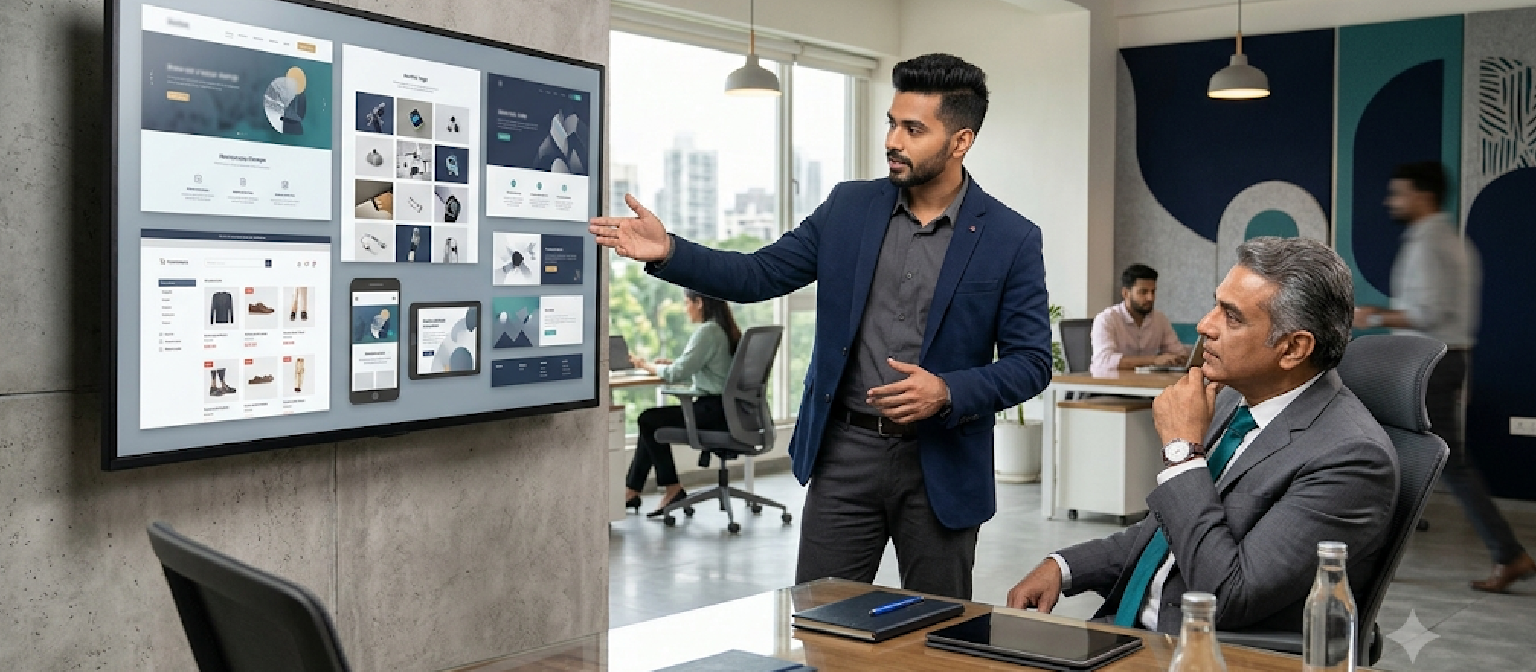
2. Review Their Portfolio and Previous Website Projects
A company’s portfolio is one of the most useful ways to evaluate its actual development capabilities. It allows you to examine the quality of completed projects instead of relying entirely on promotional claims.
Do not focus only on screenshots or attractive homepage designs. Open the actual websites and explore their functionality on desktop and mobile devices. Check whether navigation works properly, pages load correctly and the overall experience feels consistent.
While reviewing a portfolio, pay attention to:
- Industry relevance: Look for projects similar to your business type, audience or website requirements.
- Design quality: Evaluate layouts, typography, colour combinations, images and overall visual consistency.
- Mobile responsiveness: Check whether the website adapts properly to smartphones and tablets.
- Website functionality: Test forms, navigation, product filters, shopping carts and other important features.
- Performance: Observe loading behaviour and whether the website feels smooth during navigation.
- Project diversity: Check whether the company can handle different website categories, such as corporate websites, e-commerce stores and custom platforms.
Ask the development company to share live website links and explain its contribution to each project. This is especially important when multiple agencies, designers or developers have worked on the same website.
A relevant portfolio provides better evidence of capability than a large collection of unrelated design samples.
3. Understand Their Technology and Development Expertise
Different websites require different technologies. The right development platform depends on your business model, functionality, expected traffic, budget and future expansion plans.
For example, WordPress can be suitable for business websites, content-driven platforms and many WooCommerce stores. Shopify is designed for businesses that want a hosted e-commerce platform with integrated store management capabilities. Custom development may be more appropriate when a business requires specialised workflows, complex integrations or unique functionality.
Before hiring a company, understand which technologies it works with and why it recommends a particular platform.
Ask whether the team has experience with WordPress, WooCommerce, Shopify, HTML, CSS, JavaScript, PHP, APIs and other technologies relevant to your project.
A good development partner should explain the advantages and limitations of its recommended approach rather than automatically promoting one platform for every business.
Also discuss scalability. Your website may initially require only a few pages, but future requirements could include customer accounts, additional payment methods, booking systems, multiple languages or third-party integrations.
Selecting suitable technology at the beginning can reduce unnecessary redevelopment and support long-term growth.
4. Evaluate Website Design, UI/UX and Mobile Responsiveness
Website design influences how visitors understand your business and interact with your content. A visually attractive website is useful, but its layout must also make information easy to find and important actions simple to complete.
User Interface (UI) design focuses on the visual elements of a website, while User Experience (UX) considers how visitors navigate and interact with those elements.
A professional development company should consider both aspects during the design process.
Important design and usability factors include:
- Clear navigation: Visitors should be able to find services, products, contact information and important pages easily.
- Consistent branding: Colours, typography, imagery and visual elements should reflect your business identity.
- Mobile-first experience: Important content and functionality should work comfortably on smaller screens.
- Readable content: Text size, spacing, contrast and headings should support easy reading.
- Clear calls to action: Enquiry buttons, contact forms and purchase options should be easy to identify.
- Accessible design: Consider keyboard navigation, descriptive labels, colour contrast and other accessibility requirements.
Mobile responsiveness deserves particular attention because Google primarily uses the mobile version of website content for indexing. <Cite refs={[“turn932867search10”]}/>
Ask the company how it tests websites across different screen sizes and browsers. A professional design should not simply shrink desktop content to fit a mobile screen; it should provide a usable experience across devices.
5. Check Their SEO Knowledge Before Hiring
A website can look excellent and still struggle to attract visitors from search engines if its technical structure and content are poorly planned.
Search Engine Optimisation (SEO) should be considered during website development rather than treated as an afterthought. The website’s structure, navigation, URLs, headings, page speed and mobile experience can all influence how effectively search engines discover and understand its content.
Before hiring a development company, ask what SEO-related elements are included in its development process.
A well-planned website should support descriptive page titles, meta descriptions, logical heading structures, crawlable links, image alt text, XML sitemap configuration and appropriate indexing controls.
For local businesses in Mumbai, location-specific service pages, consistent business information and useful local content may also support local search visibility.
However, distinguish between SEO-friendly development and a complete SEO campaign. Technical setup does not automatically provide keyword rankings, backlinks, content strategy or guaranteed organic traffic.
Ask whether the company can collaborate with your SEO team or provide additional SEO services if required. You can also review Google’s SEO Starter Guide to understand important website optimisation principles.
6. Compare Pricing, Deliverables and Project Transparency
Website development pricing can vary depending on design complexity, number of pages, platform selection, custom functionality, integrations and ongoing support requirements.
A very low quotation may exclude important services, while an expensive proposal is not automatically better. The most useful approach is to compare what each company is actually offering.
Before accepting a proposal, check whether it clearly explains:
- Project scope: Number of pages, templates, features and integrations included.
- Design deliverables: Whether custom UI/UX design, revisions and responsive layouts are covered.
- Development costs: Platform setup, coding, plugin configuration and custom functionality charges.
- Additional expenses: Domain, hosting, premium themes, plugins, applications and third-party subscriptions.
- Payment milestones: Advance payment, development-stage payments and final payment conditions.
- Revision policy: Number of design or development revisions and charges for additional changes.
Request an itemised quotation instead of accepting a single unexplained project amount.
You should also clarify how changes to the original scope will be handled. New features introduced during development may affect delivery timelines and project costs.
A transparent proposal helps both parties understand expectations and reduces the possibility of misunderstandings.
7. Ask About the Development Process and Project Timeline
A website project involves several stages, including planning, design, development, testing and launch. Without a defined process, communication gaps and delays can affect the final delivery.
Before hiring a development company, understand how it manages projects from the initial discussion to the final handover.
A structured process generally begins with requirement gathering, where the team identifies your website objectives, audience, page structure and required functionality. The next stage involves wireframes or design concepts, followed by development and integration.
After development, the website should undergo testing before it is made publicly available.
Ask who will coordinate your project, how frequently updates will be provided and how you can review the work during development.
The company should also explain which responsibilities belong to you, such as providing website content, product information, images, branding assets and approval feedback.
A realistic timeline should identify important milestones and dependencies. Be cautious of promises that every type of website can be completed within an unusually short period without first understanding its requirements.
8. Confirm Website Security, Performance and Testing Standards
Website security and performance are essential for protecting business information and delivering a reliable user experience.
An insecure or poorly maintained website may face risks such as unauthorised access, malware, data exposure, broken functionality and service interruptions. Similarly, slow-loading pages can frustrate visitors and affect conversions.
Ask the development company what security and testing practices it follows.
A reliable development process should consider HTTPS configuration, secure administrator access, software updates, appropriate user permissions, backups and protection against common website vulnerabilities.
Performance should also be evaluated. Google recommends monitoring Core Web Vitals, which measure important aspects of loading performance, responsiveness and visual stability. <Cite refs={[“turn932867search2”]}/>
The company should test important pages and functionality before launch. This includes forms, navigation, checkout processes, payment integrations, browser compatibility and mobile layouts.
For e-commerce websites, additional attention should be given to payment gateway configuration, customer data protection and order-processing workflows.
Ask whether the company provides a testing report or explains how problems identified before launch will be resolved.
9. Understand Post-Launch Support and Website Maintenance

Launching a website is not the end of the development process. Websites need ongoing attention to remain secure, functional and compatible with changing technologies.
For example, a WordPress website may require core, theme and plugin updates. An e-commerce store may need payment gateway monitoring, product catalogue updates and checkout testing. Business websites may also require content changes, backups and technical troubleshooting.
Before hiring a development company, understand what support is available after launch.
Important support considerations include:
- Maintenance period: Check whether the company provides an initial support or warranty period after delivery.
- Technical assistance: Understand how you can report errors, broken features or website issues.
- Backup management: Confirm how frequently backups are created and how restoration works.
- Software updates: Clarify who manages platform, theme, plugin and security updates.
- Content changes: Ask whether routine text, image and page updates are included or charged separately.
- Ongoing maintenance plans: Understand monthly or annual costs and the services covered.
Also clarify response times and emergency support arrangements. A written support agreement is more useful than a general promise to remain available whenever required.
10. Verify Client Reviews, Communication and Ownership Terms
The final step is checking whether the company is reliable to work with over the complete project lifecycle.
Client testimonials, case studies and independent reviews can provide useful information about communication, delivery quality and after-sales support. Whenever possible, ask for references from previous clients whose projects are similar to yours.
Communication is equally important. The company should listen to your requirements, explain technical decisions clearly and provide realistic updates.
Before signing an agreement, clarify website ownership and access. Your business should have appropriate control over important digital assets, including the domain registration, hosting account, website administrator account and agreed project deliverables.
The contract should explain ownership of source code, custom designs, content and licensed third-party components. It should also define project scope, payment conditions, delivery milestones, revision limits, support responsibilities and termination or handover arrangements.
A professional development partner should be comfortable explaining these terms before the project begins.
Do not make your decision based only on promises, attractive quotations or marketing claims. Compare companies using the same requirements and choose the one that offers the best combination of capability, transparency and long-term value.
Conclusion
Choosing the right website development company in Mumbai requires careful evaluation of technical expertise, portfolio quality, design capabilities, SEO knowledge, pricing and ongoing support.
A successful website project starts with a clear understanding of your business goals and continues through structured planning, professional development, proper testing and reliable maintenance.
Before hiring, review live projects, compare written proposals, ask about mobile responsiveness and SEO, confirm security practices and establish clear ownership terms. These steps can help you avoid common development problems and select a partner who understands your requirements.
Whether you need a corporate website, WordPress website, Shopify store or customised e-commerce platform, choose a development company that focuses on usability, performance and business objectives.
Vipul Pore & Co. provides website design, website development and e-commerce development services in Mumbai, with solutions involving Shopify and WordPress. If you are planning a new website or upgrading an existing one, discuss your requirements with the team and evaluate a solution that aligns with your business goals.