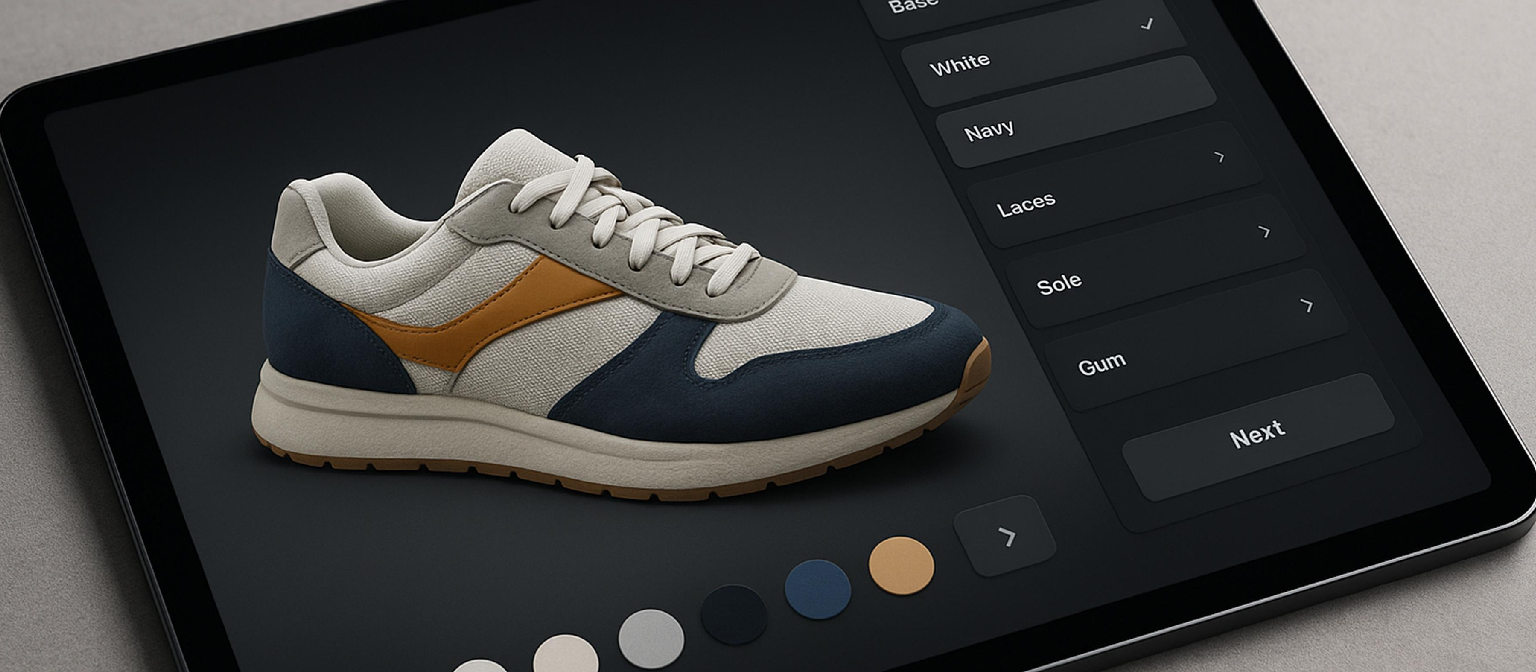
Custom Product Configurator for E-commerce: Let Customers Personalise Products Online
Online shopping has evolved beyond selecting products from fixed catalogues. Customers increasingly expect businesses to provide options that match their individual preferences, styles and requirements. From personalised clothing and engraved jewellery to customised furniture and printed accessories, product personalisation creates opportunities for e-commerce brands to offer more engaging shopping experiences.
Custom product configurator development involves building website functionality that allows customers to modify product options before placing an order. Depending on the product, customers can select colours, materials, sizes, components, add personalised text or upload images while viewing their selected configuration. Advanced configurators can also display live previews and calculate updated prices. For e-commerce businesses, this technology helps create interactive product experiences while making customised purchasing more organised.
1. What Is a Custom Product Configurator and How Does It Work?
A custom product configurator is an interactive website feature that allows customers to personalise or configure products before purchasing them. Instead of selecting only from predefined product variations, customers can choose different specifications and create a product that matches their preferences.
For example, an online furniture store can allow customers to select sofa dimensions, fabric colours, materials and finishing options. As customers make their selections, the configurator displays the chosen specifications and may update the product preview and total price.
Similarly, a clothing brand can allow customers to choose garment colours, upload artwork or add personalised names to products. The selected configuration is then transferred to the shopping cart and order details so that the business can process the customised purchase.
A basic configurator may use dropdowns, radio buttons and checkboxes, while advanced solutions can include interactive 2D or 3D product visualisation. The appropriate approach depends on the product’s complexity and the expected customer experience.
2. Why E-commerce Businesses Should Offer Product Personalisation
Product personalisation gives e-commerce businesses an opportunity to offer something beyond standard catalogue products. Customers can choose features that reflect their requirements instead of purchasing an identical version of a product available to everyone.
For example, a jewellery store may allow customers to engrave initials or select gemstones, while a stationery brand can offer personalised notebook covers and custom printed names.
A product configurator can also help customers understand available choices before purchasing. Instead of contacting customer support to ask about every available option, shoppers can explore supported configurations directly on the product page.
For businesses, structured customisation options can make customer requirements clearer and reduce manual communication during order processing. The business can also differentiate its products through personalised combinations and specialised features.
However, a configurator should provide genuine customer value. Adding unnecessary options can make the shopping process confusing, so businesses should focus on choices that are practical to manufacture and meaningful to customers.
3. Essential Features Every E-commerce Product Configurator Should Include
A professional product configurator should provide an easy way for customers to select options and understand how their choices affect the final product.
Important product configurator features include:
- Product Variant Selection: Allow customers to choose available colours, sizes, materials, patterns and other predefined specifications.
- Custom Text and Image Uploads: Provide options to enter personalised messages, names, monograms or upload suitable artwork.
- Live Product Preview: Display changes to product appearance as customers select different options.
- Dynamic Price Calculation: Update the product price according to selected components, materials, upgrades or customisation charges.
- Conditional Product Options: Show relevant additional choices based on previous selections to simplify complex configuration processes.
For example, a personalised gift store may allow customers to select a product, choose its colour, enter a name and preview the design before adding it to the cart.
The selected options should also be stored with the order so that the business receives the correct information for production and fulfilment.
4. Different Types of Products That Can Benefit from Online Configurators
Product configurators can support many industries, particularly businesses selling products with multiple variations or made-to-order specifications.
Furniture companies can use configurators for selecting dimensions, upholstery, finishes and additional components. Fashion brands can provide personalised printing, garment colours and design selections. Jewellery retailers can offer engraving, gemstone selection and customised finishes.
Electronics businesses may use configurators to let buyers choose compatible components or technical specifications. Printing companies can allow customers to upload artwork, select paper sizes, choose finishes and preview printed materials.
The complexity of the configurator should match the available manufacturing options. Businesses should identify which selections can be combined, which are mutually exclusive and which combinations require additional production time.
Before developing the configurator, companies should prepare product specifications, option values, pricing rules and relevant product images. This makes it easier to build an accurate configuration experience without offering combinations the business cannot actually fulfil.
5. Real-Time Product Visualisation and User Experience

The ability to see product changes while making selections is one of the most useful features of an advanced product configurator. Visual feedback helps customers understand how different options affect the finished product.
Businesses can use image swapping, layered images, interactive 2D previews or 3D models depending on their product requirements.
An effective product visualisation experience should include:
- Interactive Colour Selection: Update the product image when customers choose different colours or finishes.
- Component Visualisation: Show how selected components or materials change the overall product appearance.
- Text and Image Placement: Allow customers to see where personalised names, logos or uploaded artwork will appear.
- Mobile-Friendly Controls: Make configuration options accessible through smartphones and tablets.
- Clear Configuration Summary: Display selected specifications, additional charges and the final product details before checkout.
For example, a customer configuring a customised T-shirt should be able to see the selected colour and personalised artwork without repeatedly refreshing the page.
A responsive and intuitive interface makes complex products easier to explore and helps customers review their decisions before placing an order.
6. Dynamic Pricing, Product Variants and Inventory Management
A product configurator should connect customer selections with the business’s pricing and inventory rules. Different materials, sizes, components or personalisation services may have different costs, and the website needs to calculate the correct order total.
For example, a furniture store may offer different fabric categories at different prices. Selecting a premium material should update the final price according to the configured pricing rules.
Inventory management is equally important. If a product option depends on a limited-stock component, the configurator should use the correct availability information before allowing customers to purchase that configuration.
Businesses should distinguish between standard product variants and additional customisation fields. A standard size or colour variation may require its own stock record, while an engraving or gift message may simply be stored as an additional order detail.
Price calculations and stock validation should also be checked securely on the server before an order is accepted. This helps prevent incorrect totals and unavailable product combinations from entering the fulfilment process.
7. Choosing the Right Technology for Custom Product Configurator Development
The right technology depends on the complexity of the product, required visualisation and existing e-commerce platform.
- WooCommerce Product Customisation: WooCommerce product add-ons can support text fields, dropdowns, checkboxes, file uploads, image selections and additional charges. Suitable extensions can support many basic and intermediate personalisation requirements.
- Shopify Product Configurator: Shopify provides standard product variants and supports advanced customisation through compatible applications, custom theme development and Shopify APIs.
- Custom PHP and Laravel Development: Custom development can support specialised product rules, pricing calculations, configuration storage and connections with production systems.
- JavaScript and React Development: Interactive frontend technologies can create responsive configuration interfaces, dynamic previews and more advanced product selection experiences.
- 2D and 3D Visualisation Technologies: Suitable graphics libraries and 3D rendering tools can be integrated when customers need to view products from different angles or explore more complex components.
WooCommerce and Shopify can provide practical starting points, while custom development is worth considering when existing extensions cannot support the required business workflow.
The final choice should be based on functionality, performance, maintenance and integration requirements rather than technology popularity alone.
8. Connect Product Configurations with Cart, Checkout and Order Fulfilment
A product configurator must remain connected to the complete e-commerce purchasing process. It is not enough to display a customised product preview if the selected details disappear when the customer proceeds to checkout.
Every configuration should be stored with the corresponding cart item and order information. This allows administrators and production teams to understand exactly what the customer selected.
For example, when a customer orders a personalised phone case, the website should retain the selected colour, uploaded image and requested text throughout the purchasing process.
Custom product information may also need to be transferred to order confirmation emails, invoices or production instructions depending on the business workflow.
Businesses should test the complete order journey, including editing configurations, removing products, changing quantities and completing checkout. Uploaded artwork should be stored securely and associated with the correct order.
A reliable connection between product configuration and fulfilment reduces confusion and helps businesses process customised orders more accurately.
9. Common Product Configurator Development Mistakes Businesses Should Avoid

A poorly planned configurator can make online shopping more complicated instead of improving it. Businesses should carefully consider how customisation options are presented and how the selected information is handled.
Common mistakes include:
- Too Many Customisation Options: Offering excessive selections can overwhelm customers and make product configuration difficult.
- Inaccurate Product Previews: Showing visual changes that do not match the actual manufacturing result can create unrealistic expectations.
- Incorrect Price Calculations: Failing to account for component costs, additional services or quantity-based charges can create pricing errors.
- Poor Mobile Experience: Difficult selection controls and slow visual previews can make configurators frustrating on smaller screens.
- Missing Order Information: Losing selected options or uploaded files during checkout can create production and customer support problems.
- Ignoring Performance: Large images and complex 3D visualisation can affect loading speed when not properly optimised.
Testing different configurations before launch helps identify these problems. Businesses should also review the configurator regularly as product specifications, pricing and available inventory change.
10. How to Develop and Launch a Successful E-commerce Product Configurator
Developing a successful configurator begins with identifying which products need customisation and what choices customers should be able to make. Businesses should prepare product specifications, supported combinations, additional pricing rules and visual references before starting development.
The next stage involves selecting an appropriate technology and designing the configuration interface. Wireframes and prototypes can help businesses evaluate how customers will select options and review the final product.
Developers then implement the product selection logic, visual previews, pricing calculations and configuration storage. The configurator should be connected to the existing product catalogue, shopping cart, checkout and order management system.
Testing should cover valid and invalid combinations, price changes, product availability, file uploads, mobile responsiveness and order information. Where products are manufactured after purchase, sample orders should also be checked with the production team.
After launch, businesses can review customer interactions, abandoned configurations and completed purchases to identify improvements. A well-developed product configurator should remain easy to maintain as new products and personalisation options are introduced.
Conclusion
Custom product configurator development helps e-commerce businesses offer personalised shopping experiences through interactive product options, live previews and dynamic pricing. From customised clothing and jewellery to furniture and electronic products, configurators allow customers to create products that better match their preferences.
Choosing between WooCommerce, Shopify and custom development depends on product complexity, visualisation requirements, inventory management and order fulfilment workflows. A successful configurator should connect the customer experience with accurate pricing, product availability and production information.
At Vipul Pore & Co., businesses can explore custom e-commerce development, Shopify customisation and product personalisation solutions designed around their product requirements. With the right technology and development strategy, an online product configurator can create a more engaging shopping experience while supporting efficient customised order management.