
Introduction
A professional business website needs more than attractive design to perform well on Google. Its pages must also be organised, informative, and easy for search engines and visitors to understand. On-page SEO techniques help businesses optimise webpage content, headings, images, links, and other page elements to improve relevance and usability. By following a consistent on-page SEO strategy, businesses can make their services easier to discover, attract relevant organic traffic, and provide a better experience for potential customers. Regular optimisation also helps keep website content aligned with changing customer needs.
1. Conduct Keyword Research Before Optimising Pages
Keyword research helps identify the words and phrases potential customers use when searching for your products or services. Before optimising a page, determine its primary topic and the search intent it should address. Choose a relevant primary keyword and supporting terms that naturally fit the content. Assigning a clear purpose to each page can reduce unnecessary overlap between similar pages. Instead of forcing keywords into every sentence, use them where they help explain your services and answer the questions your audience is likely to have.
2. Optimise Title Tags and Meta Descriptions
Title tags and meta descriptions help communicate what a webpage is about in search results. A clear, relevant title can help users understand whether the page matches their needs, while a useful meta description can summarise its main value. Each important page should have unique metadata that accurately reflects its content.
Key benefits include:
- Title tags: Write descriptive, relevant titles and include the primary keyword naturally where appropriate.
- Meta descriptions: Summarise the page clearly and explain what visitors can expect to find.
- Avoid duplication: Use distinct titles and descriptions for different service and product pages.
- Match search intent: Ensure metadata accurately represents the information available on the page.
Google may generate different title links or snippets based on the search query, so metadata should be helpful rather than treated as a guarantee of how results will appear.
3. Structure Content with Clear Headings
Well-organised headings make website content easier to scan and understand. Use a clear main heading that describes the page’s topic, followed by relevant subheadings that organise supporting information into logical sections. A consistent heading hierarchy helps readers locate important details without navigating through large blocks of text. Include keywords in headings when they fit naturally, but prioritise clarity over keyword repetition. Service pages should explain what you offer, who it helps, and why customers might choose your business.
4. Create Helpful and Original Website Content
High-quality content is central to effective on-page SEO. Your website should provide useful information that answers customer questions and explains your products or services accurately. Avoid thin, repetitive, or copied content created solely to include keywords. Instead, provide clear descriptions, practical examples, relevant details, and answers to common concerns. Keep information up to date and remove outdated claims when necessary. Well-written content helps visitors make informed decisions and gives search engines meaningful information about the purpose and relevance of each page.
5. Improve URL Structure and Internal Linking
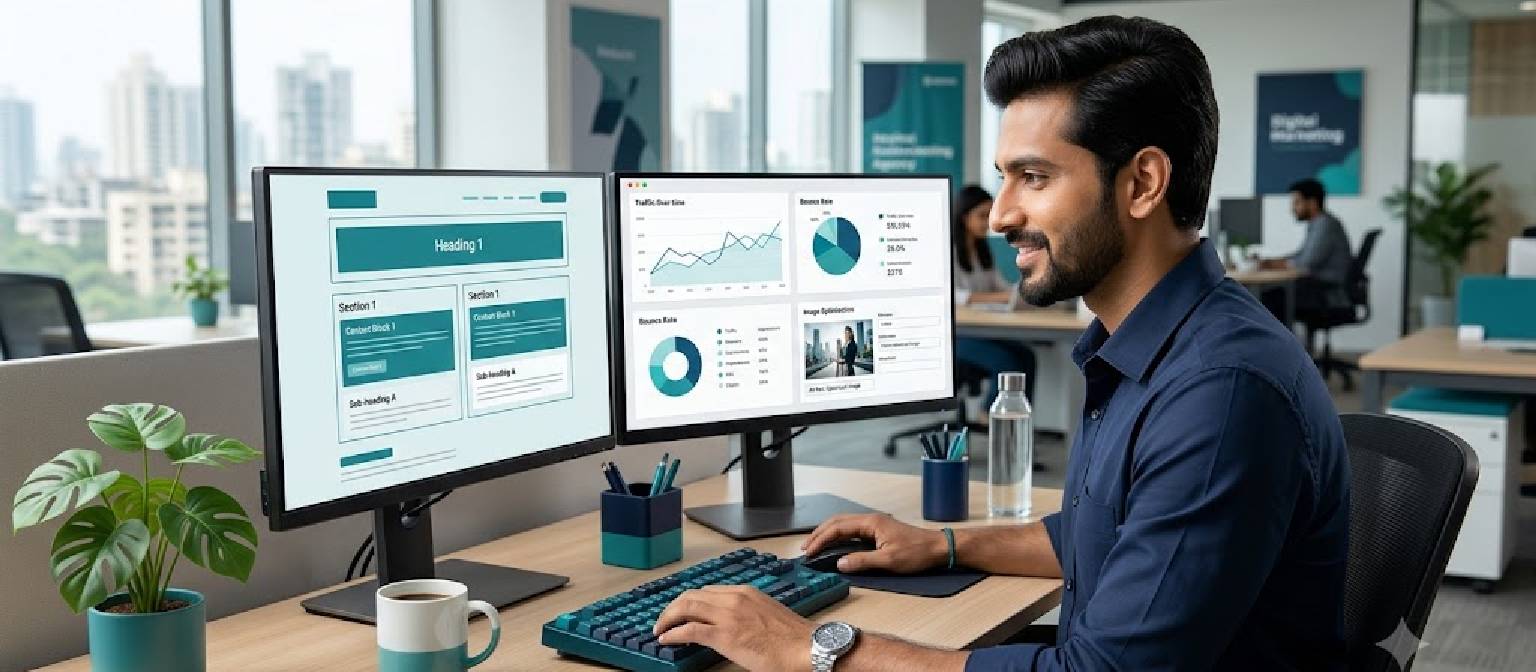
Clear URLs help users understand what a page contains before opening it. Use short, descriptive URL paths where practical, and avoid unnecessary parameters or confusing strings when a simpler structure is possible. Internal links connect related pages across your website and help visitors discover additional information. For example, a service page can link to a relevant case study or supporting blog article. Use descriptive anchor text that explains the destination, and ensure important pages can be reached through logical navigation. Review internal links regularly to identify broken links and improve the overall site structure.
6. Optimise Images and Website Media
Images can improve the visual quality of a website, but unoptimised media may slow down page loading. Resize images appropriately, compress files while preserving useful quality, and choose suitable formats for the website. Use descriptive file names and meaningful alternative text for images that communicate important information. Alt text should explain the image’s purpose rather than contain unnecessary keywords. Decorative images can be handled appropriately so they do not add noise for assistive technologies. Efficient image optimisation supports accessibility, usability, and website performance.
7. Make Your Website Mobile-Friendly and Fast
Visitors should be able to read content, navigate pages, and use forms comfortably on smartphones as well as desktops. Responsive design helps page layouts adapt to different screen sizes, while readable fonts and touch-friendly controls make interactions easier. Improve loading performance by compressing images, reducing unnecessary scripts, and using suitable hosting and caching. Test key pages on different devices and resolve layout problems, broken elements, or slow-loading resources. Mobile usability and performance improvements contribute to a smoother experience, although they do not guarantee higher rankings on their own.
8. Monitor On-Page SEO and Update Pages Regularly
On-page SEO should be reviewed as your business, services, and customer needs evolve. Use Google Search Console to monitor search queries, impressions, clicks, and indexing issues. Review important pages to identify outdated information, missing metadata, weak content, and broken internal links. Update pages when you have useful new information rather than making changes simply to appear active. Track relevant enquiries and conversions alongside search performance to understand whether your optimisation supports business goals. Regular reviews help maintain website quality and reveal opportunities for further improvement.
Conclusion
On-page SEO techniques help business websites become clearer, more useful, and easier for search engines to understand. Keyword research, descriptive metadata, organised headings, helpful content, internal linking, image optimisation, and responsive design all contribute to a well-structured website. No single technique guarantees a top Google ranking, but consistent, user-focused optimisation can strengthen search relevance and improve the visitor experience. By reviewing and improving important pages regularly, businesses can build a stronger foundation for organic visibility, customer engagement, and long-term online growth.